
How to discover Palermo in the best way ?
Palermo is a city that reveals itself gradually. Colourful, fascinating and wonderfully full of contrasts, Sicily’s capital carries the traces of the many cultures that have shaped the island over the centuries. Arab-Norman architecture, Baroque churches, elegant palaces, historic theatres and animated street markets create a cityscape unlike anywhere else in Italy.
Palermo can feel grand and intimate, chaotic and beautiful, sometimes all within the space of a few streets.
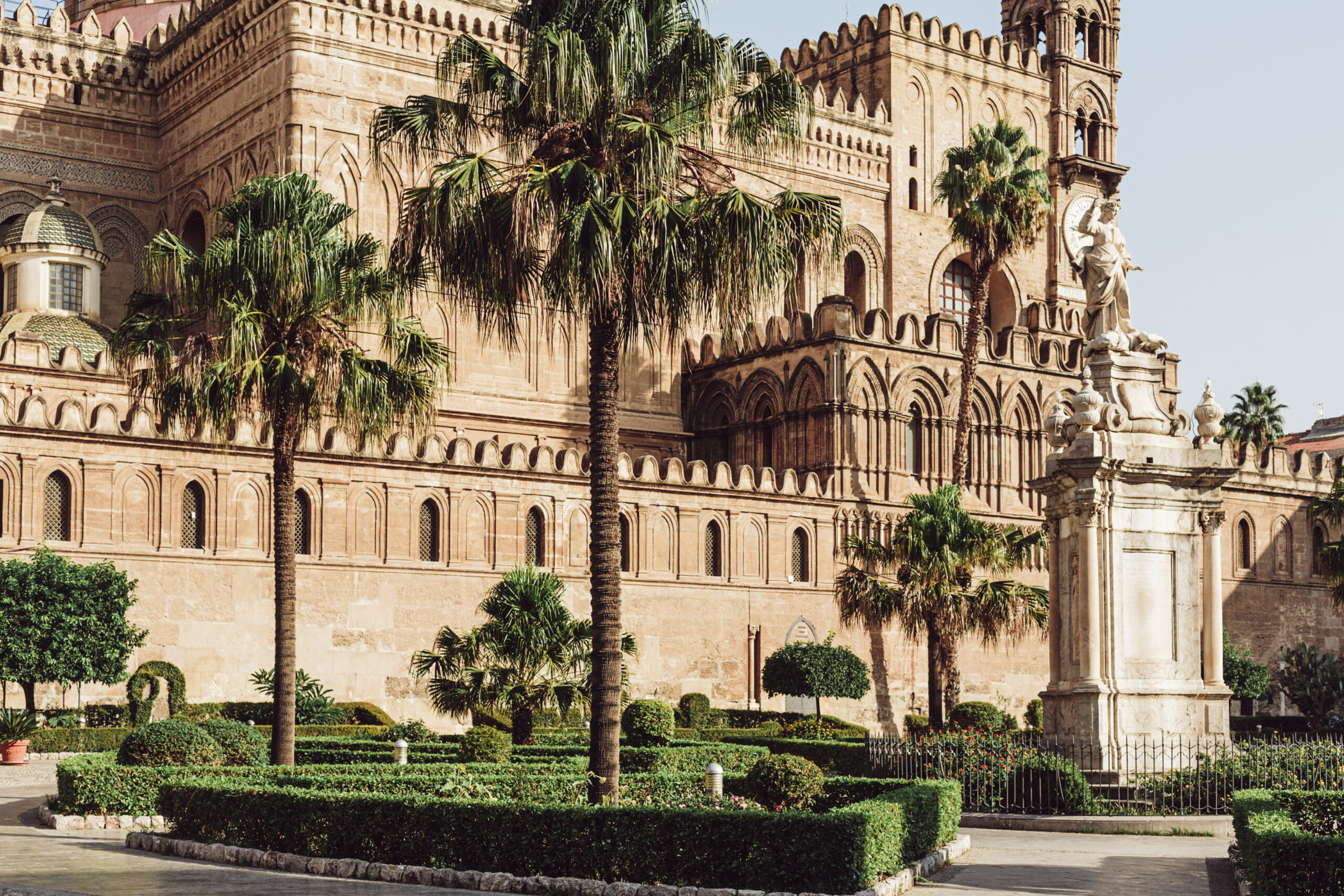
Exploring the historic centre on foot is the best way to understand its extraordinary character. One of the first monuments to capture the imagination is Palermo Cathedral, an impressive building whose architecture reflects centuries of change and cultural influences. Towers, arches and decorative details create a monumental exterior that seems to tell the complex history of the city before you even step inside.
Not far away stands the Palazzo dei Normanni, one of Palermo’s most important historic buildings. Inside is the magnificent Palatine Chapel, perhaps one of the most memorable artistic treasures in Sicily. Its interior glows with extraordinary golden mosaics, while Byzantine, Norman and Islamic influences come together in a remarkable expression of Palermo’s multicultural past.
Continue through the centre and you will eventually reach Quattro Canti, the theatrical Baroque crossroads that marks the intersection of two of Palermo’s main historic streets. From here, the pleasure lies in wandering without rushing. Churches, hidden courtyards, small shops and impressive façades appear unexpectedly, making every walk feel like a new discovery.
Yet Palermo’s identity is not found only in its monuments. To understand the city, you also need to experience its markets. Ballarò, Capo and Vucciria are filled with voices, colours and aromas. Vendors display fruit, vegetables, fish, spices and local products, while street-food stalls prepare some of the dishes that have made Palermo famous throughout the world.
Food here is not simply something to eat; it is part of the city’s culture.
Try panelle, traditional chickpea fritters often served inside bread, or a golden arancina filled with rich, savoury ingredients. Another Palermo speciality is sfincione, a soft and flavourful local interpretation of pizza. More adventurous visitors can taste pani câ meusa, the traditional spleen sandwich that represents one of the city’s oldest street-food traditions. And, of course, there is always room for a classic Sicilian cannolo, with crisp pastry and sweet ricotta filling.
After the intensity of the historic centre, the nearby seaside district of Mondello offers a completely different atmosphere. Its sandy beach and clear Mediterranean water make it an ideal place for a relaxing afternoon, especially during the warmer months.
Palermo cannot truly be understood through a checklist of attractions. Its magic lies in the combination of monumental architecture, street life, food, history and human energy.
It is a city to explore slowly, to taste enthusiastically and, above all, to experience with curiosity — a journey into the complex and captivating soul of Sicily.

